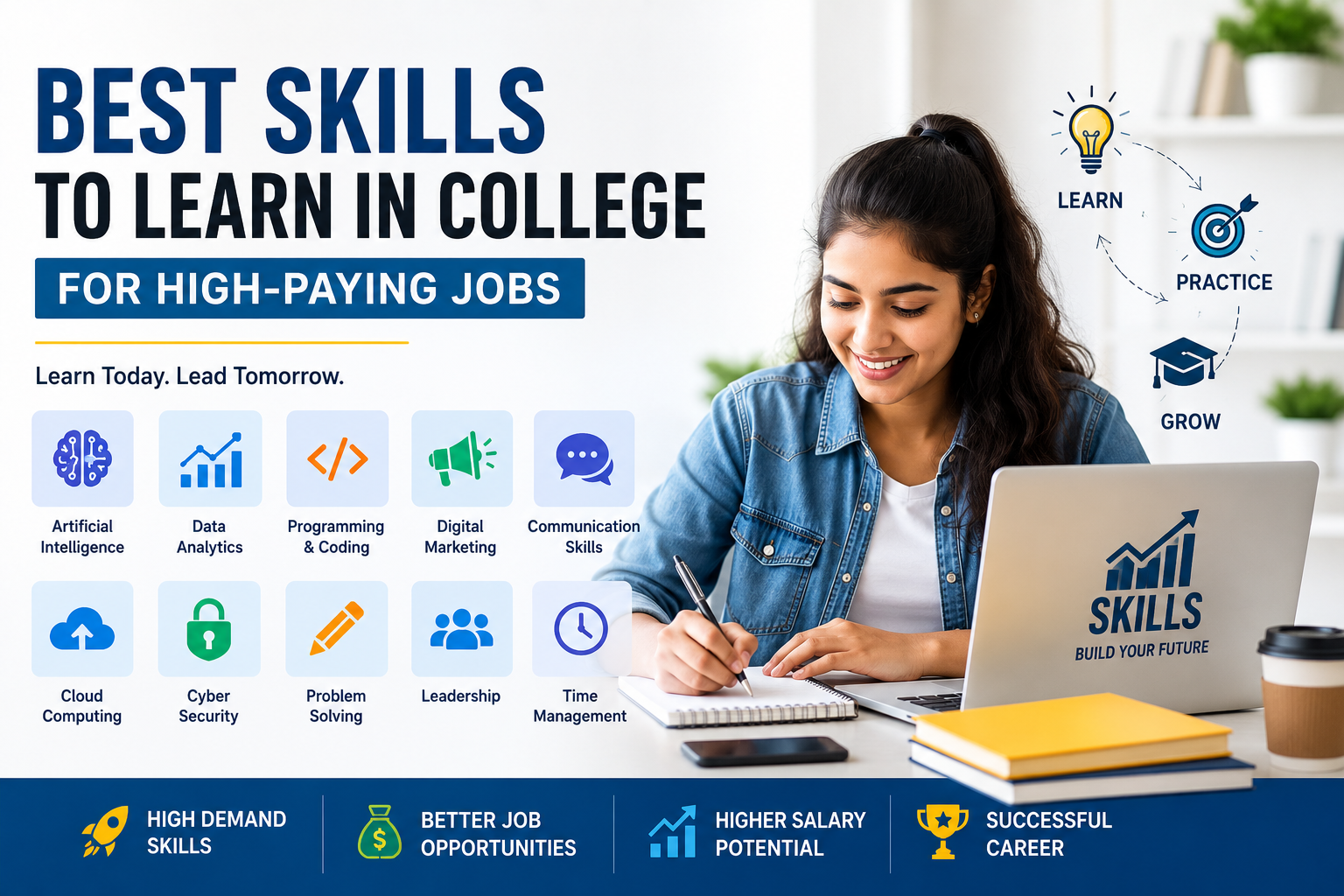
A college degree is important, but in today’s competitive job market, skills matter just as much as qualifications. Employers are increasingly looking for candidates who can solve problems, adapt to new technologies, communicate effectively, and contribute from day one.
Whether you’re pursuing engineering, commerce, science, arts, or management, learning the right skills during college can significantly improve your employability and help you secure high-paying jobs.
In this guide, we’ll explore the best skills to learn in college in 2026 and how they can prepare you for a successful career.
Why Skills Matter More Than Ever
The job market is evolving rapidly due to advancements in Artificial Intelligence (AI), automation, cloud computing, and digital transformation. Companies are hiring candidates who possess practical, job-ready skills alongside academic knowledge.
Benefits of developing skills during college include:
- Better placement opportunities
- Higher starting salaries
- Improved internship prospects
- Enhanced confidence and communication
- Greater career flexibility
- Stronger professional network
Best Skills to Learn in College
1. Communication Skills
Strong communication is essential in every profession.
Learn How To:
- Speak confidently
- Deliver presentations
- Write professional emails
- Improve business communication
- Participate in group discussions
Career Benefits
- Better interview performance
- Leadership opportunities
- Workplace collaboration
2. Artificial Intelligence (AI)
AI is transforming industries across the globe.
Skills to Learn
- Prompt Engineering
- Machine Learning Basics
- Generative AI Tools
- AI Productivity Applications
Popular AI Tools
- ChatGPT
- Google Gemini
- Microsoft Copilot
- Claude
Career Opportunities
- AI Specialist
- AI Consultant
- Prompt Engineer
As AI continues to transform industries, it’s important to understand how it will impact future careers. Read our AI Will Replace These Jobs: What Students Should Study to discover future-proof career options and the skills employers are looking for.
3. Data Analytics
Every organization relies on data-driven decisions.
Learn
- Excel
- SQL
- Python
- Power BI
- Tableau
Career Roles
- Data Analyst
- Business Analyst
- Data Scientist
Interested in technology careers? Explore our detailed comparison of Data Science vs Artificial Intelligence: Which Career Is Better? to understand salaries, job roles, required skills, and future opportunities.
4. Programming Skills
Even non-technical students benefit from basic coding knowledge.
Recommended Languages
- Python
- Java
- JavaScript
- C++
- SQL
Career Opportunities
- Software Developer
- Web Developer
- Automation Engineer
5. Digital Marketing
Businesses need professionals who can grow brands online.
Learn
- Search Engine Optimization (SEO)
- Social Media Marketing
- Google Ads
- Content Marketing
- Email Marketing
- Analytics
Career Roles
- Digital Marketing Executive
- SEO Specialist
- Performance Marketer
6. Financial Literacy
Understanding money management is a valuable life skill.
Learn
- Budgeting
- Investing Basics
- Tax Planning
- Personal Finance
- Mutual Funds
7. Public Speaking
Confident speakers often become successful leaders.
Improve Through
- College presentations
- Debate competitions
- Toastmasters
- Seminars
8. Leadership Skills
Leadership begins long before becoming a manager.
Develop By
- Organizing college events
- Leading student clubs
- Managing projects
- Volunteering
9. Problem-Solving
Employers highly value candidates who can think critically.
Practice:
- Case studies
- Logical reasoning
- Real-world projects
- Hackathons
10. Time Management
Managing academics, internships, and extracurricular activities requires effective planning.
Useful Tools
- Google Calendar
- Notion
- Trello
- Todoist
11. Cybersecurity Basics
Digital security awareness is becoming essential in every industry.
Learn
- Password security
- Cyber hygiene
- Ethical hacking basics
- Network security
Students interested in science and investigation can also explore the Future Scope of Forensic Science in India to learn about career opportunities, top colleges, and emerging job roles.
12. Cloud Computing
Cloud technology powers modern businesses.
Popular Platforms
- Amazon Web Services (AWS)
- Microsoft Azure
- Google Cloud
Career Options
- Cloud Engineer
- DevOps Engineer
- Cloud Consultant
13. UI/UX Design
Companies need professionals who can design intuitive digital experiences.
Learn
- Figma
- Adobe XD
- User Research
- Wireframing
- Prototyping
14. Networking Skills
Building professional relationships can open doors to internships and jobs.
Build your network through:
- College alumni
- Conferences
- Webinars
- Industry events
15. Interview Skills
Many talented students miss opportunities because they lack interview preparation.
Practice:
- HR interview questions
- Technical interviews
- Mock interviews
- Resume discussions
Technical Skills vs Soft Skills
| Technical Skills | Soft Skills |
|---|---|
| Programming | Communication |
| AI Tools | Leadership |
| Data Analytics | Teamwork |
| Cloud Computing | Problem-Solving |
| Digital Marketing | Adaptability |
| Cybersecurity | Emotional Intelligence |
A combination of both technical and soft skills makes candidates more competitive in the job market.
Free Platforms to Learn New Skills
Students can build valuable skills using trusted online learning platforms:
- Coursera
- edX
- LinkedIn Learning
- Google Skillshop
- Microsoft Learn
- freeCodeCamp
- Kaggle
- HubSpot Academy
Explore industry-recognized courses through Google Career Certificates to build job-ready skills.
How to Start Learning While in College
Set Clear Goals
Choose skills that align with your career interests.
Learn Consistently
Spend at least 30–60 minutes each day improving your skills.
Build Projects
Apply your learning through real-world projects and personal portfolios.
Complete Certifications
Industry-recognized certifications add credibility to your resume.
Gain Practical Experience
Participate in internships, hackathons, freelance projects, or volunteer work.
Common Mistakes Students Should Avoid
- Focusing only on academic grades
- Ignoring communication skills
- Avoiding internships
- Learning too many skills without mastering any
- Not building a portfolio
- Neglecting LinkedIn networking
Frequently Asked Questions
Which skill is most in demand in 2026?
AI, data analytics, cloud computing, cybersecurity, digital marketing, and communication skills are among the most sought-after skills.
Can non-engineering students learn programming?
Yes. Programming languages like Python are beginner-friendly and useful across many industries.
Are certifications important?
Yes. Certifications demonstrate practical knowledge and strengthen your resume, especially for internships and entry-level jobs.
When should students start learning new skills?
The first year of college is an ideal time, but it’s never too late to start.
Final Thoughts
Academic knowledge provides the foundation for your career, but practical skills help you stand out in a competitive job market. By learning the best skills to learn in college, you can improve your employability, secure better internships, and prepare for high-paying careers.
Start with one or two relevant skills, practice consistently, build real-world projects, and continue learning throughout your college journey. Investing in yourself today will create better career opportunities tomorrow.