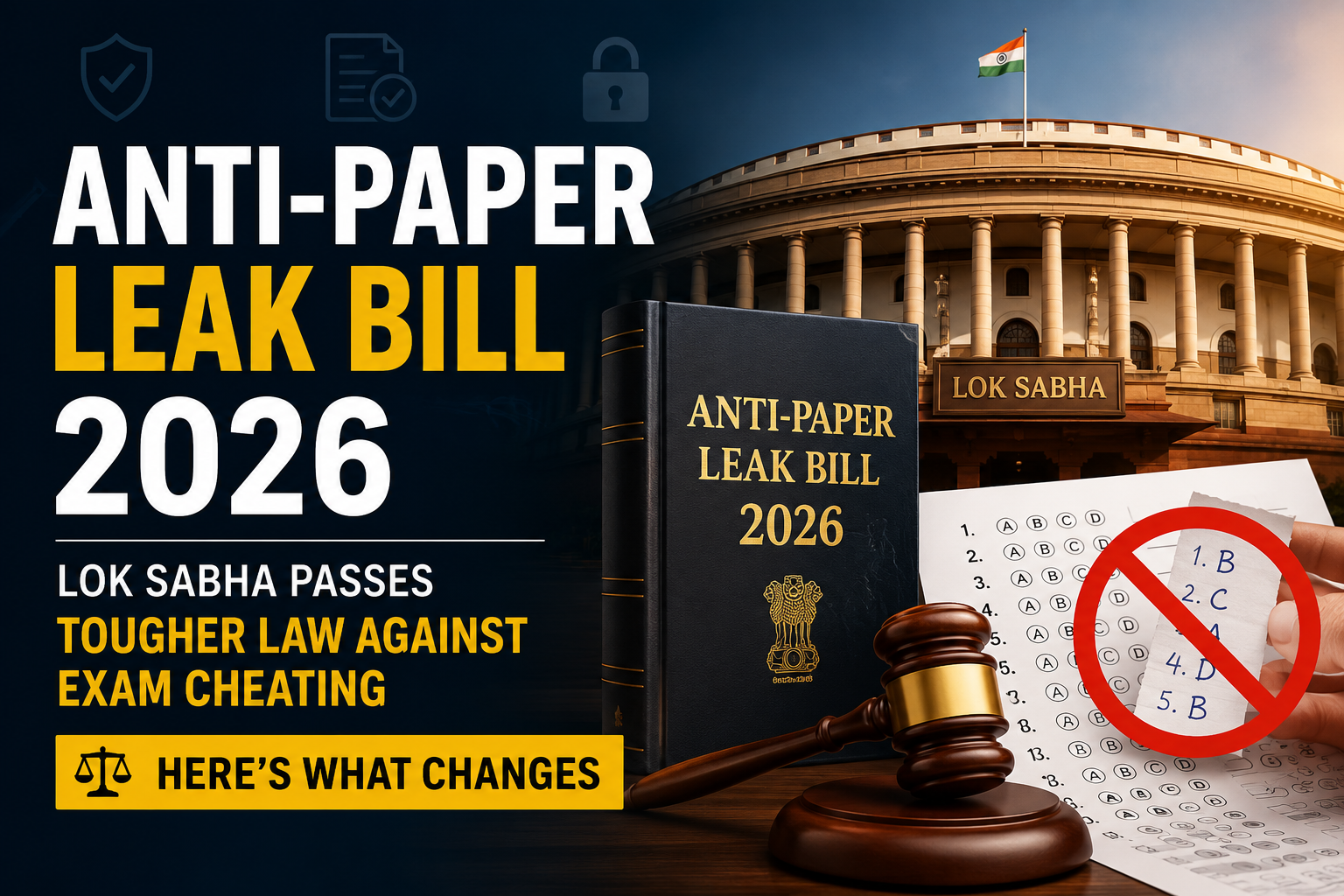
If you’re preparing for UPSC, SSC, NTA-conducted exams like NEET or JEE, or any recruitment test run by a central government body, there’s an important legislative update you should know about. On July 29, 2026, the Lok Sabha passed the Public Examinations (Prevention of Unfair Means) Amendment Bill, 2026, tightening India’s already-existing anti-cheating law and introducing much harsher penalties for anyone involved in paper leaks or exam fraud.
Here’s a breakdown of what the bill does, why it matters, and how it could affect future exam cycles.
Background: Why This Bill Was Needed
India already had a law addressing this problem — the Public Examinations (Prevention of Unfair Means) Act, 2024 — introduced as the country’s first comprehensive legislation criminalising cheating and malpractice in public exams. It covered major exam-conducting bodies including UPSC, SSC, Railway Recruitment Boards, the Institute of Banking Personnel Selection, and the National Testing Agency (NTA), which runs NEET and other national-level entrance exams.
Despite that law, high-profile paper leak controversies — most notably around NEET — kept surfacing, prompting sustained pressure from students, opposition parties, and the public for the government to close loopholes and speed up justice for those affected. The new amendment bill is the government’s response to that pressure.
What’s New in the 2026 Amendment
The amendment bill, introduced by Union Minister Dr. Jitendra Singh, significantly raises the stakes for anyone caught manipulating the exam process. Key changes include:
Steeper prison terms and fines for individuals: The minimum jail term for a person caught using unfair means jumps from 3 years to 5 years, with the maximum extended from 5 years to 10 years. The maximum fine has been raised from ₹10 lakh to ₹50 lakh.
Much harsher penalties for exam service providers: Private agencies or organisations contracted to help conduct exams face a maximum fine increase from ₹1 crore to ₹5 crore if found involved in malpractice. Their ban from conducting future public exams has also been extended — from 4 years to 8 years.
Tougher accountability for company management: Directors and senior management of service providers now face a minimum of 5 years’ imprisonment (up from as low as 3 years), with fines rising in line with the company-level penalties.
Faster investigation and trial timelines: The bill mandates that investigations be completed within two months and introduces Special Fast Track Courts to hear these cases. Trials must proceed on a day-to-day basis and be completed within three months of transfer to these special courts.
A dedicated Special Task Force: The central government is now empowered to set up a special task force specifically to investigate exam-related offences, in addition to existing provisions allowing cases to be handed to central investigating agencies.
Time-bound appeals: Appeals against Fast Track Court decisions will go directly to a two-judge bench of the High Court, with a target of resolving them within three months of admission.
How It Passed
The bill cleared the Lok Sabha by voice vote, though not without drama. The Monsoon Session had already been marked by repeated opposition disruptions over the NEET paper leak issue since it began on July 20. During the debate itself, the discussion briefly shifted away from the bill’s provisions into a political clash — with allegations exchanged over police action during a student protest — before the House was adjourned for the day.
The bill still needs to clear the Rajya Sabha before it becomes law, so this isn’t the final step in the process — but the Lok Sabha’s approval marks a major move forward.
What This Means for Students
For students preparing for competitive exams, this amendment sends a clear signal: the legal consequences for anyone involved in leaking papers or running organised cheating rackets are becoming significantly more severe, and cases are meant to move through the courts faster than before. Whether this translates into fewer leaks and more consistent, fair exam cycles going forward will depend on enforcement — but on paper, it’s the strongest legislative step India has taken yet against organised exam fraud.
We’ll keep this space updated as the bill moves through the Rajya Sabha and toward becoming law.
Stay tuned to Campus Freshers for the latest updates on exam policies, admissions news, and everything that matters to Indian students.